
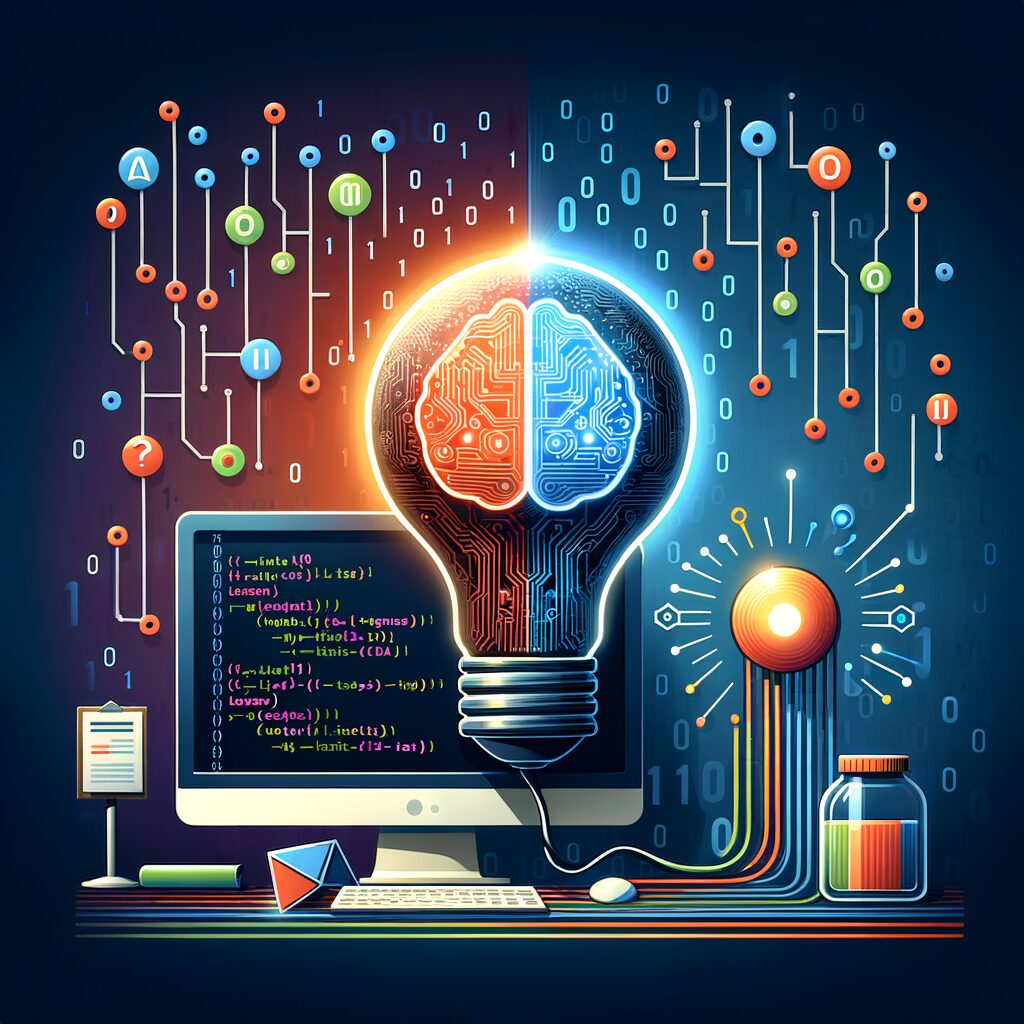
Automating Software Quality with AI: From Smart Code Reviews to Test Generation
There’s a moment every engineering leader recognizes: a pull request sits idle with a dozen tiny comments, a CI run times out, and an engineer is stuck rewriting tests at 2 a.m. The pain is not just lost hours. It’s the steady erosion of velocity and morale as teams spend their best minds on repetitive quality chores instead of building features. The good news: AI, combined with traditional analysis and sensible CI/CD automation, can reclaim that time without turning your codebase into an opaque black box.
Below are concrete patterns and practical steps for offloading repetitive QA work while preserving developer autonomy, code quality, and safety.
Why this matters (and why it hurts)
- Pull-request review queues clog release cadence. Reviewers repeat the same nitpicks. Important architectural concerns get buried under style comments.
- Writing and maintaining tests is tedious and often inconsistent. Teams under-test critical paths and over-test trivial ones.
- Flaky tests and noisy CI cause developers to ignore failures, which erodes trust in the pipeline.
- Prioritization of bugs is often reactive: the loudest or most visible bug gets fixed first, not the riskiest.
If your platform team has felt these pains, automation can’t simply be “more tools.” It must be targeted: reduce the manual burden while keeping engineers in control.
Core patterns to implement
- AI-assisted code review with human-in-the-loop gates
Pattern:
- Use an AI component (LLM or code-specialized model) to produce review suggestions: potential bugs, unused code, security flags, readability improvements, and automated refactor sketches.
- Surface suggestions as draft comments on PRs, not as hard blocks. Require a human reviewer to approve or dismiss AI flags before they become part of the review record.
Integration point: - Run models as a PR check in your CI (GitHub Actions, GitLab pipelines, Jenkins). Add a “machine suggestions” review label so humans can filter it.
How it protects autonomy: - Keep final approval with human reviewers; use AI to reduce cognitive load and catch low-hanging issues.
- Automated test-case generation and mutation testing
Pattern:
- Generate unit and integration test candidates from function signatures, docstrings, and runtime traces. Feed those into a test harness as suggested tests for human validation.
- Apply mutation testing to measure test suite effectiveness: mutate code and see which tests catch the change. Use AI to propose additional test cases where mutation scores are low.
Integration point: - Run generation and mutation tests as nightly or pre-merge jobs to avoid slowing PRs. Present failing mutation alerts on dashboards.
Human role: - Engineers validate generated tests, cherry-pick useful ones, and correct false assumptions. Over time, accepted tests become part of the suite and reduce manual test-writing.
- Smart flaky-test detection and rerun strategies
Pattern:
- Record test metadata: runtime environment, seed values, test duration, last-modified commit, and historical pass/fail. Use anomaly detection to label likely flaky tests.
- Implement staged rerun strategies: immediate rerun for transient failures, quarantine for repeatedly flaky tests, and ticket generation after threshold.
Integration point: - Embed flaky detection into CI so flaky reruns happen automatically. Push quarantined tests to a “flaky list” for triage.
Outcome: - Developers stop wasting time chasing transient failures; CI trust rises as reruns and quarantine reduce noise.
- Prioritizing fixes via risk scoring
Pattern:
- Compute a risk score for new alerts by combining static-analysis findings, change size, historical defect locations, test coverage, and production telemetry (error rates, customer impact).
- Rank bug fixes and test improvements by expected reduction in production risk and effort estimate.
Integration point: - Integrate risk scores into issue trackers and release planning tools so product and engineering can make objective trade-offs.
Benefit: - Scarce engineering time focuses on changes that actually reduce production risk.
Governance and security considerations
- Data leakage: never send production secrets, PII, or proprietary logs to external models without encryption and contractual protections. Prefer on-premise or VPC-hosted model instances for sensitive data.
- Explainability: record model outputs, prompt versions, and decision rationales so audits can trace why a suggestion was made.
- Access control: separate read-only model access from mutation rights. Only trusted automation agents should be allowed to commit auto-generated content.
- Human oversight: require explicit human sign-off for any automated change that touches production code paths or config.
- Compliance: treat model logs as artifacts subject to retention and deletion policies to meet regulatory needs.
Measurable KPIs to track ROI
Don’t guess whether automation helps—measure it. Useful KPIs:
- Review time saved: average time from PR creation to merge, and median reviewer time engaged per PR (measure before and after pilot).
- Defect leakage: count of production incidents attributable to code quality issues compared over equal release windows.
- Deployment frequency and lead time: how often you deploy and how long it takes from commit to production.
- Test suite effectiveness: mutation score and percentage of coverage in critical modules.
- Flaky-test noise: number of CI reruns per successful build and mean time to quarantine a flaky test.
Track these KPIs per team and per repository to detect where automation helps most.
Actionable implementation tips
- Start small: pilot on a non-critical repo. Choose a team open to experimentation and with clear baseline metrics.
- Human-in-loop first: configure AI to comment but not commit. After confidence builds, allow automated commits behind feature flags or with code owners’ approval.
- Iterative feedback: log which AI suggestions are accepted or rejected. Use this to fine-tune prompts and models.
- Nightly runs for heavy work: place heavyweight mutation testing and test generation in nightly jobs to avoid slowing developer feedback loops.
- Educate engineers: run workshops showing how generated tests are proposed and how to vet AI suggestions.
- Monitor for drift: periodically reassess model performance and update datasets to avoid concept drift.
Common pitfalls and how to avoid them
- Blind trust: Teams that accept AI outputs without review risk subtle regressions. Enforce human approval gates.
- False positives/negatives: Expect noise. Use thresholds and confidence levels; tune for your codebase.
- Secret exposure: Never casually send sensitive code or logs to public models. Use private hosting when necessary.
- Cultural resistance: Automation that feels like policing will fail. Present it as a productivity tool and allow teams to opt into levels of automation.
- Scope creep: Don’t try to automate everything at once. Focus on the repeatable, time-consuming tasks first.
Closing: a practical next step
If this feels like the future you want—less late-night triage, faster sane releases, and developers focused on product work—plan a three-month pilot: pick a repo, instrument the KPIs above, and implement human-in-loop AI reviews plus nightly mutation testing. Iterate from there.
MyMobileLyfe can help engineering teams design and implement these AI, automation, and data strategies so you recover engineering time and reduce costs. Learn more about their AI services at https://www.mymobilelyfe.com/artificial-intelligence-ai-services/.




















































































































































































Recent Comments